Back to School Edition: Tip #5

ice cubes

Catch up on the first four tips starting here!

Back to School Tip of the Day #5

Keep it cool. Creating an open line of communication between you and your child is SO important.  Investing time in talking and listening when your son or daughter is young increases the chances that you will have a finger on the pulse of what is happening when that kid becomes a teenager. Listening to your child, whether she is crying about a devastating disagreement with her friends, struggling to make a difficult decision, or just laughing about something that happened at school, shows that you want to hear it all, both the big moments and the small ones. It encourages your child to trust you and to seek your advice when times are hard.

But you already knew all of that, right? This is where things get a bit more difficult. Listening, at least for me, is the easy part; controlling my reactions can be very hard, especially when one of my sons is feeling hurt.

Trusting your child is important, especially if he is feeling unsafe, but it is also important to realize that what he shares with you in the heat of the moment is often shaped by emotion. Respect your kids and listen to them and let them know that you appreciate what they share. Help them to brainstorm solutions and teach them how to navigate the choppy waters of relationships. But also remember that children (and even adults) sometimes allow their sadness, anger, fear, or frustration to give them a biased view of a situation. It’s our job as parents to help our kids see the bigger picture, and sometimes that means that they need to accept some responsibility for the situation at hand.

When your child says that the teacher was mean to her, be sympathetic, but don’t lose your cool and rush to call the local news. When your child says that this is the worst school year ever, be understanding, but don’t immediately leave the principal a voicemail with words that are only allowed on television after 10 p.m. When your child complains about other kids or parents, don’t grab your megaphone and announce it to the neighborhood. Acknowledge your child’s feelings. Breathe deeply. Let everyone cool down. Consult others you trust. Take some time to assemble the puzzle before you say or do something that you will need to apologize for later.

Here’s the truth, friends.  In many cases, today’s drama is tomorrow’s “no big deal.”

Unless, of course, you just went Real Housewives in front of the school’s security camera.  Uh oh.  In that case, you’re on your own.

How can you get your child to tell you more about his day?
Join us tomorrow for ideas!

photo credit: <a href=”http://www.flickr.com/photos/98640399@N08/9378147944″>Ice 9331</a> via <a href=”http://photopin.com”>photopin</a&gt; <a href=”https://creativecommons.org/licenses/by/2.0/”>(license)</a&gt;

Back to School Edition: Tip #4

Post Its

Did you miss tips #1, #2, and #3?
There is still time to catch up and create a mindset for a successful school year! 

Back to School Tip of the Day #4

Make it personal.  This may be the best advice that you receive in this series because today’s ideas came straight from my kids, and they are smarter than I am! I asked my guys what parents can do to help their kids enjoy a successful year. Their answers gave me a “lightbulb moment” – and made me wonder why we adults forget that the strategies that work for us can translate to our kids, too.

Before we dive into the tip of the day, ask yourself this: What is it that allows some people to successfully complete a challenge when others refuse to try or quit before meeting their goals? We like to think that successful people have just had it easy, and in some cases that’s true, but most successful people have overcome significant obstacles to get to the top. They have faced problems. They have experienced failure. They have felt sad and angry and hopeless at times. They have wanted to raise the white flag somewhere along the way, but they didn’t – because they developed resilience. They learned strategies to cope when the goin’ got rough. I don’t know about you, but I want my kids to learn to push through their challenges when they really feel like throwing in the towel, and this requires them to develop a healthy sense of self.

So what will help a child persevere when a school day feels stressful? My oldest son shared that when he is having a bad day, his stress decreases when he pulls something that makes him happy out of his backpack. For example, his math worksheet doesn’t seem quite as painful when he puts it into his Jurassic World folder because that folder reminds him of a fun family memory when we went to that movie on opening night. It warms my heart to know that something as simple as a $1 folder from Target is enough to soothe his nerves when he is threatening to become the next elementary school dropout.

Folder

When I saw these Jurassic World folders, I knew that my son would love them, but I had no idea that there was a reason beyond the fact that dinosaurs are cool. It never occurred to me that having something that specifically applied to his interests, something personal, would actually help his self-esteem, but it makes sense. On those days when he feels frustrated or inadequate at school, that folder reminds him that he is smart (because he DOES know a lot about dinosaurs), that he has a family that loves him (because he connects the image to a memory), and that he is more than just a kid who is struggling to conquer a difficult math concept. That simple folder is a triple threat to a bad day!

Maybe this is why he often keeps a few drawings in his folders, too. His vocabulary words may be difficult this week, but his artwork reminds him that he is a talented artist, and that gives him a little boost of confidence just when he needs it. How will my son’s artistic talent help him to earn higher grades in his other classes? It won’t, at least not directly. But his drawings allow him to say, in his head, “I am talented. I can do things. Look at what I can accomplish when I put my mind to it.” Adults create similar reminders in their own homes and workspaces. Why do you think so many diplomas and race bibs and hunting trophies are hanging on walls?

So how can you remind your kids of their uniqueness, their talents, and their accomplishments when you cannot stand beside their desks with pompoms during the school day? The solution is to find ways to stay connected and personalize your child’s experience as much as possible. Sometimes, it’s as simple as buying a folder with dinosaurs on it.  Sometimes, you need to be creative.  Maybe her math notebook has to be plain and red, but you could tape a meaningful photograph on the inside cover for a little inconspicuous pick-me-up. Do you have photographs on your desk at work? My office is full of pictures because they brighten my day and remind me that I matter outside of my work responsibilities. They also reveal that I have a loving support system despite my mistakes and that I have something to look forward to at the end of the day – snuggling up with my husband and kids. Maybe sending a few photos to school with our kids would provide a similar shot of sunshine!

Grandma

Here are some other ideas! Choose one to give your child a built-in boost on a gloomy day:

  • Write your child an encouraging letter at the beginning of the school year. Give him the note and a lucky charm when school starts, and encourage him to tuck them into a secret backpack compartment. Just knowing that they are always there can be reassuring.
  • If your child has to wrap textbooks, use white butcher paper or freezer paper. Let your child decorate the covers however she wants. She can use stickers, markers, photos, or magazine clippings, ask classmates to sign it, or create a collage of her favorite things to fight that stressful feeling.
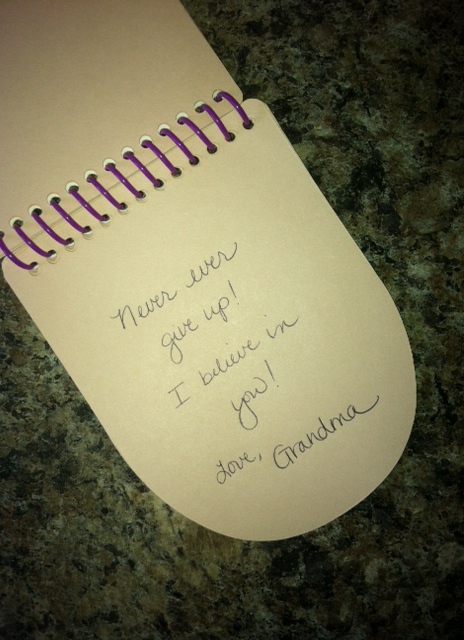
  • Buy a mini-notebook and fill it with encouraging thoughts at the beginning of the school year if you won’t remember to send notes on a regular basis throughout the year. Ask aunts, uncles, cousins, siblings, and grandparents to fill pages, too. Read through it together and then stick it in a special place in your child’s backpack. Revisit it at the start of every quarter.
  • Stick a post-it note with an encouraging thought on the front door every morning for your child to read and/or take. A little chalkboard by the door is another option. Texting may work well with older kids, if you are able to text outside of class times.
  • Buy the miniature version of your child’s favorite candy. Stick one in his jacket pocket every once in a while for a little surprise from Mom and Dad.
  • Send encouraging notes daily or randomly in her lunchbox.  Watch for a future post full of specific ideas!
  • Within reason, let your child choose the first-day outfit or the lunchbox or the backpack that you would never choose. Let her be an individual. This says, “I like you just the way you are.”
  • Buy an extra folder for your child’s backpack. Label it something like “HAPPY” or “PRIDE.” Help your child choose a few items to put into the folder at the beginning of the year, including photographs or other things that reflect his interests. Throughout the year, suggest that he add items to the folder, like a special note that his teacher gave him or a test that he aced because he studied really hard. When your child has had a bad day, remind him to look through his folder for a mental boost.

Education in our country is becoming more and more standardized and less and less personalized, which would make sense if students were standards instead of persons. Kids need to be reminded that they are valued as individuals, that they are multi-faceted human beings with both strengths and weaknesses, and that they have overcome obstacles in the past and can do so again. Whenever possible, find ways to make it personal!

Tomorrow we will talk about the importance of keeping your cool.
Join us for Tip #5!

Back to School Edition: Tip #3

Light Bulb

Did you miss the first part of this series?
Click here for Tip #1 and click here for Tip #2!

Back to School Tip of the Day #3

Don’t leave the teacher in the dark. Sometimes our instinct as parents is to withhold information that is painful to discuss. We do this with the best of intentions, to protect our kids from embarrassment, judgement, or ridicule. Maybe you have a child who has a history of disruptive behavior, and you are afraid that sharing this with the new teacher will cause her to see your child in a negative light. Maybe your child has had trouble concentrating in the past, but you don’t want the teacher to expect this because you are hoping that this year will be different. Maybe there are things going on at home like a divorce, the death of a grandparent, or a recent move, that are causing stress for your child, but you consider these to be private issues or just find them difficult to discuss. As a mom, I totally understand this desire to protect by withholding, but trust me when I say that YOUR CHILD’S TEACHER NEEDS TO KNOW. He wants to create a smooth transition for your child, and you can help him plan for your child’s success by sharing critical information, such as how your child learns best, how she typically behaves, when she feels most stressed, and what has helped her to be successful in other classrooms.

This information impacts everything from the seating chart in the classroom to the way that kids are grouped to the teaching methods that are chosen for each part of the material to the strategies that the teacher uses with your individual child. Sure, the teacher will eventually figure out that this child is painfully shy and that those two children should never be seated together and that another child feels anxious unless she is close to the teacher, while that child has a tummy ache every afternoon after lunch and another cries whenever she thinks about her old dog that probably will not live much longer. The teacher will eventually figure out the other fifteen students, too. But when the first nine weeks is like a giant riddle, then a lot of time is wasted just figuring everything out.

It is a common misconception that teachers just know things, that information that is given to one teacher one year automatically trickles to the next grade level, but that isn’t always true, especially in the higher grades. Unless your child has needs that have been documented on an IEP, for example, there is a good chance that your child’s new teachers will need you to start from scratch in explaining what might work best. It’s unfortunate, but it’s true. Most schools have not perfected a way to update and transfer this kind of information from teacher to teacher, and I have yet to attend professional development on extrasensory perception, which is surprising since that could be more helpful than some of the PD I have attended throughout my career.

If you have a child in middle or high school, he probably does not want you to talk to the teacher much, if ever at all. He would really prefer that his parents didn’t even know that he has teachers and that his teachers didn’t even know that he has parents. This is totally normal and is a sign of healthy development, really; he should be gaining more independence as he matures. Unless you are planning to be his roommate in college, it is very important for him to start learning to handle some things on his own. This does not mean, however, that you should not communicate with his teachers at all anymore. It just means that you need to learn to operate like a secret agent, and, fortunately for you, e-mail makes that very easy for our generation.

Although older kids suddenly want to tackle everything independently, common sense says that they don’t go from “mom handles everything” to “I’ve got this all by myself” overnight. By the upper grades, your job is to guide your student in addressing her own problems and encourage her to talk to the teacher herself, but it is still your responsibility to inform the teacher of key information and to check in once in a while to see if your child is following through with her responsibilities. In many school districts, you can check your older child’s performance online at any time, which can help you to keep an eye on her academic progress, but that report may not indicate if she spends a lot of time alone, has a negative attitude, or has to be reminded often not to sleep in class. While you might think that those issues would warrant a call from the teacher, keep in mind that the high school teacher may see 150 students in a day, so unless you ask, you may not be notified of a behavior that does not stand out as unsafe, disruptive, or extreme. This is why conferencing with the teacher is still important, even when students are in the upper grades. A teenager who wants to sleep during math class may not trigger an alarm in the mind of the math teacher, but you may see it as a sign that something has changed with your son or daughter.

Here is another reason to communicate openly with your kid’s teacher. When you have limited information and you are trying to solve a riddle, you may make assumptions that are wildly incorrect. Think about this example. You are teaching a high school student who always sits in the back of the classroom. He rarely completes any of his work, doesn’t talk to many other kids, and refuses to explain his lack of effort when you try to talk to him. He appears to be extremely tired day after day and seems to have no support from home. It looks like he just doesn’t care.  You have tried to contact the parents because you are concerned, but you have gotten no response. The same thing is happening in his other classes. What might you conclude? Really, what would you assume?

Did you guess that his father has terminal cancer, that he is exhausted from caring for his father at night while his mom is at work, and that his mother is emotionally overwhelmed and has not had time to return your calls? This information might dramatically change your approach with this student. Every student has a story that impacts his learning, and I, as the teacher, can’t choose the best approach to help him without knowing what that story is. It might surprise you that the school wouldn’t be aware of a story this heartbreaking, but it happens all the time.

We like to think that fair means that all of our children are treated the same, but the truth is that treating everyone the same is not fair. However, your child’s teacher cannot meet your child’s individual needs if you aren’t up front about what is going on in your child’s life. You should know that when you share your private information, your child’s teacher has a responsibility not to share that information with other students or parents. Before you share, you should also know that teachers are mandated reporters, which means that they are legally bound to report if child abuse is suspected, even if that information was shared with them in confidence.

If you want your child to get off to a great start this year, consider sharing any information that might help the teacher meet your child’s needs right off the bat. You have control of the light switch.  Don’t leave the teacher in the dark.

If your child is having a tough day at school, how can you brighten the gloom?
Check out Tip #4 tomorrow!

photo credit: <a href=”http://www.flickr.com/photos/64111606@N00/3424750103″>Create Your Own Light…</a> via <a href=”http://photopin.com”>photopin</a&gt; <a href=”https://creativecommons.org/licenses/by/2.0/”>(license)</a&gt;

Back to School Edition: Tip #2

If you missed the introduction to this series and tip #1, click here!

Back to School Tip of the Day #2

You may not like a teacher’s style, but that doesn’t mean that you can’t work together for the good of your child. Let’s say that you and your child’s teacher really do have totally different approaches to, well, everything. Let’s say that you don’t like the worksheets that she sends home or the way that she organizes her classroom or her dry sense of humor. Let’s say that you have conferenced with her about some of your concerns, but you are convinced that last year’s teacher did everything better. As long as your child’s safety and success are a priority for this teacher, your difference of opinion does not mean that the year is ruined – unless, of course, you choose to look at it that way.  Suck it up, Buttercup. 

This is a tough one, I know, but the reality is that you can be supportive of your child’s teacher even if the two of you are polar opposites. First, remind yourself that there is usually more than one way to the same end result. You may not like the technique, but that doesn’t mean that your child will not learn and grow, maybe even exponentially, this year. Give it some time. Second, remember that this teacher is another human being, not an evil super villain. He is just a guy who is continuing to develop in his career, who has feelings (Can you believe it?), and who faces challenges outside of work, you know, like everyone else. Make an effort to get to know him better. Try offering encouragement when your impulse is to write a nasty note instead. Share your concerns, for sure, but throw in some positive comments to open the lines of communication. Make sure that you are building a bridge and not a wall between you and the teacher. Finally, keep in mind that a teacher is accountable to lots of people – the board of education, school administrators, students, and parents, to name a few. Whatever it is that you don’t like about her classroom, another parent loves. If you think there is too much homework, someone else thinks there is not enough. If you think the teacher is too relaxed, someone else thinks she is too strict. I know that your friends all agree with you when you complain, but I swear this dynamic is true. It may just be necessary to accept that “different” does not necessarily mean “wrong,” and if your child isn’t complaining, then be careful not to project your own frustrations onto him. You want him to be happy, even if you are not.

If your child is complaining about something that bothers you, too, then have an honest, age-appropriate conversation about it. (If you are worried that your child might announce to the class that her mommy says the teacher does everything wrong, then your kid may not be ready for this.) It’s important for older kids to know that adults can work together and respectfully disagree. There have been a couple of occasions when I have said something like this to my frustrated child, “I understand how you feel. I would feel that way, too.  If I were your teacher, I probably wouldn’t do it this way. But I’m not your teacher, and this isn’t my classroom. I have talked to her, and I know that she has reasons for doing things this way, and we both really want you to be successful. It’s okay that we don’t agree. But it’s not okay to be disrespectful or to disobey the rules of her class.” Even when you tell your child that you disagree with the teacher, be sure to emphasize what the two of you do have in common – a commitment to your child’s achievement. Your child shouldn’t have to choose sides.

Although it can be frustrating, it can actually be GOOD for your son or daughter to learn to work with different teachers who have their own unique styles and routines. After all, school is not just about academics. It is a training ground for real life. Being adaptable is a life skill that has helped my husband and I to survive marriage, for example. (I would suggest that one of us has had to endure a little more than the other, and he would agree, although I think he might be applying that to the wrong person.) Anyone who has been employed knows that adaptability is also essential to achieving success at work. If my husband and I had quit a job every time we disagreed with a co-worker, then we would not have been able to afford a new air conditioner this summer, which also might have ended our marriage. I really can’t stress enough how important adaptability is to long-term relationships.  (I’m only partly joking here, people!)

If all else fails, think of it like this. You are Gwyneth Paltrow and the teacher is Chris Martin, and you have vowed to work together for the good of the kids despite your differences. On the bright side, you will only share child rearing with this teacher for a year, while Gwyneth and Chris will be working out their issues until the end of time. See. There is always a silver lining if you search for it.

Come back tomorrow for another back to school tip!  How much should you tell the teacher?

photo credit: <a href=”http://www.flickr.com/photos/10361931@N06/4268864706″>Macro of sharpened colored pencils aranged in a circle</a> via <a href=”http://photopin.com”>photopin</a&gt; <a href=”https://creativecommons.org/licenses/by/2.0/”>(license)</a&gt;

Back To School Edition: Tip #1

 Bus

Hey, I think I saw you in the school supply section yesterday, grabbing the last blue-Mead-100-page-wide-ruled-spiral-notebook off the shelf just as another mom tried to snatch it up. Oh, how school shopping brings out the best in us! Every August, you and I, we stalk the aisles as if we are on a safari, commissioned to find some rare species on the edge of extinction, and every year I think, “For the love of God, school administrators, can’t we just add some money to our already frustrating school fees and order this stuff in bulk?”

Even though I might, maybe, complain just a little bit about school supply shopping, the truth is that I love it as much as I hate it. I enjoy the ritual of it, the anticipation created by a backpack overflowing with sharpened crayons and undefiled paper and fresh markers. Maybe that’s because I always loved school as a kid, or maybe it’s because I crave a routine after the seduction of summer. Maybe it’s because I see the start of the school year as more symbolic of a new beginning than January 1. (Or maybe it’s because I need some alone time. I really, REALLY need some alone time, people.)

Regardless, we all invest quite a bit of time and money into gathering all of the tangible things that our kids need to get off to a good start at school, but sometimes we forget to think about the intangibles that can make a HUGE difference in the quality of our kids’ year. Somewhere between organizing all of the supplies, planning the first-day attire, and grocery shopping to fill the lunchboxes, it might be a good idea to create a mindset for the school year that will help your child to achieve happiness and success. For that reason, I’ll be sending you one tip a day for the next nine days, some things to ponder as we all prepare for the big first day. And if you are TOTALLY OVERWHELMED by nine posts in nine days, please don’t worry. Once school starts, things at my house speed up and the blog will slooooow down! I promise!  I’ll aim for once a week . . . if I’m lucky!

Back to School Tip of the Day #1

If your first impression of your child’s new teacher is negative, keep it to yourself.  I remember one particular meet-the-teacher experience when I was, well, not impressed. The meeting left me expecting a disappointing year for my son, but, fortunately for us, I later discovered that my first impression had been totally wrong. This teacher turned out to be sweet, creative, and very effective in working with my kid.

The truth is that you can’t really tell what a teacher will be like in the classroom after talking to her for five or ten minutes. (Keep in mind that sometimes talking to parents can be just as intimidating for teachers as talking to teachers can be for parents!) You also can’t predict what your experience with a teacher will be like just from talking to other parents, whose opinions are often based on the opinions of ten-year-olds and, at least partly, on gossip.

But here is the most important point: Even if you don’t think you are going to like the teacher, if you want your child to get off to a great start, you need to put on your happy face when talking about school with your child. You can commiserate privately with a friend. You can schedule a conference with that teacher every week. You can make an appointment with the principal if absolutely necessary. But your goal is to foster a good relationship between your child and that teacher, and this will be virtually impossible if you are badmouthing her in front of your kids or openly venting on Facebook. (Everyone knows that Facebook is where we pretend to be happy, anyway, so just default to that social norm in this situation.) And one more thing to consider: Most “problems” are actually just “miscommunications” that can be easily resolved if you aren’t afraid to raise your concerns in a face-to-face conference with the teacher. Try this before erupting like Mount Vesuvius and see what happens.

What if, after a few weeks of school, you still don’t like the teacher?  Check out Tip #2 tomorrow!

photo credit: <a ef=”http://www.flickr.com/photos/57166722@N00/2756087093″>New York</a> via <a href=”http://photopin.com”>photopin</a&gt; <a href=”https://creativecommons.org/licenses/by/2.0/”>(license)</a&gt;

To the Mom in the Preschool Drop-Off Line

Preschool

Hello, friends!  Watch for some back-to-school posts on the blog in the next few days!  I am excited that THIS post is also featured on The Today Show Parenting Blog.  Please click here to give me your vote!

To the Mom in the Preschool Drop-Off Line:

I see your child before class, so sweet and small and pure of heart. I see those chubby cheeks, that baby face, reminders that this little person who is growing oh-so-quickly was swaddled in your arms not long ago. I see him clinging to your leg, his knuckles white, his eyes glossy with tears that are just about to spill.

His anxiety is running high, and so is yours, but your acting skills have come a long way this year, Mom. You deserve a round of applause, a standing ovation. You should get an Oscar, really, for pretending that preschool drop-off doesn’t bother you, that helping the teacher peel your crying child off your body one finger at a time is no big deal, that watching the director pull your sobbing little guy from your car doesn’t feel like your heart is being crunched in a vice. You don’t want to make the situation worse, and your child is anxious enough on his own, so you do your best to appear calm every time. You don’t have the minutes or the privacy to meditate before preschool since small children are always running circles around you, but you try to channel your inner yogi while zipping the jackets and buckling the car seats and running back in the house for that thing you forgot.

You start the engine each morning knowing exactly what is going to happen. It’s an uneasy feeling that gets your adrenaline pumping so that this drive to school is somehow similar to dipping your toe into a shark tank or leaping from a plane when you are afraid of heights. You think that maybe it is most like having a tooth pulled. It might be necessary. It might be the right thing to do. It might pay off in the long run. But it is also painful. And you choose to do this three mornings a week. Who has a tooth pulled three times a week? Eventually, you would run out of teeth.

The teachers at school are very nice. They smile. They tell you that, although the first ten minutes are difficult, your child is usually fine after that. He asks about you often and watches the clock, but he has friends and is learning quickly and likes to paint and loves the playground. They really enjoy him, they say, and you know that they do, but you sense frustration. Maybe you should try a sticker chart to encourage him not to sob inconsolably every day? Maybe you should offer a reward if he does not cry for a week when he goes to school? Maybe it would be better if you did not walk him to class but used the drop-off point outside instead?

And you wonder, “Do they honestly think I haven’t tried these things?”

The truth is that you have tried everything. You are still trying everything. You have sought advice from every mom you know. You have read every mommy blog that you can find. You have asked the preschool director and the pediatrician for ideas. No one has found a solution to this problem. And maybe there is no solution because there isn’t a problem. There is a child. Your child. Your child, whom you love to the moon and back, who experiences separation anxiety. Maybe that is just who he is and you cannot change it and it is going to take time for him to learn the strategies he needs to cope. Maybe you need people to understand and accept it. Maybe you need to accept it, too.

You remember that your older son cried once when you left him at preschool. After school, you talked to him. You looked him in the eyes. You asked him why he cried. He wasn’t sure. You asked him if he was afraid at school, if everyone was nice to him. He loved his class and his teachers and his friends. You explained that he was going to go to school whether he cried or not, so wouldn’t it be better to enjoy his time at school? Mommy would pick him up every day, right on time, and she wanted him to have fun with his friends.

He never cried another day.

Other moms told you not to worry. This would last only a few days. He would stop crying when he got into the routine. “It’s normal,” they said. “My kids cried for a few days, too.”

Then they said to give it a few weeks. It would be fine. Really, it would. Maybe their children had been sad a little longer than they had remembered, yes, now that they thought about it, but soon those kids were skipping down the halls in a rush to get to class. “Trust me,” they said. “It won’t last!”

Now they don’t say anything. They just smile, a sideways kind of smile with a cocked eyebrow that shows empathy. But you wonder if they are thinking about where you must have failed as a mother. Because that is what you are thinking. It has to be your fault. Did you hold him too much or too little? Is it because you decided to stay home with him for a few years? That sacrifice seemed selfless at the time, but was it selfish? Is it because you moved, and it took time to trust people, and he was with you, and you only, so much of the time? Did you genetically gift him with your own anxieties?  What a horrible gift. What did you do, and how do you unravel it now? Maybe you need to be more understanding. Maybe you need to be more stern. How do you stop your child’s suffering?

This is the cry of your heart, but you are a smart lady, and your mind knows better. It is not your fault. The pediatrician said that it is not your fault. You know that everyone faces unique challenges that must be overcome, and your children will be no exception. You had just hoped that those challenges would not start so early, with your sweet little boy facing anxiety, real anxiety, at just four years old.

I know that you use the drop-off line, because that is what the teachers asked you to do, and that you smile as the director lovingly drags (because there is no other way) your child from the car. I know that you thank her every day for her patience. I know that it makes you sad to see the line of cars behind you, all of those moms and dads watching your child make his dramatic entrance every day. I know how hopeful you are whenever he has a good day, or a good week, or a good month, and how devastated you feel when a new wave of anxiety consumes him and it all starts again.

I know that when you pull out of the parking lot some days, your stoic façade cracks, and tears stream down your cheeks all the way home.

I know that you are a person who likes to be in control of your life, and it is hard for you to accept that this is out of your control. You want to fix things for your kids, to make them happy, and you cannot fix this. I know that you know that this child is a tremendous blessing and that other parents face greater challenges, but I give you permission to feel what you feel. Your sadness and guilt and anger are real, and problems are all relative, anyway.

I know that it will get better, that your child will grow and he will mature and he will learn about his emotions and how he can cope. He may outgrow his anxiety, or he may not, but he can learn to manage it with time. I know that he will eventually go to school without tears, but it may be a long time before that happens, and that is okay. I know that your child is his own person with his own schedule. I know that you are trying very hard and that you will find loving, supportive friends who will understand. I know that his anxiety does not diminish his kindness, his intelligence, his enthusiasm, and his loving heart. I know that you have an amazing kid.

Most of all, I know that he is really, REALLY lucky to have you on his team.

Sincerely,

The Mom Who Won the Oscar for “Best Performance at a Preschool Drop-Off” in 2010

No is Not Cool

No

There’s this word that I’ve been saying too often this summer, and it’s starting to get on my nerves, actually. My kids swear the word is evil, and it does leave a bad taste in my mouth when I say it, sometimes bitter, like regret, sometimes saltier, like anger. Sometimes, when I have repeated it more than a few times in five minutes, it tastes a bit like exhaustion. It’s a little word, just two letters, yet it holds extraordinary power. According to my kids, this word alone has propelled me to “the meanest mom” and “the worst mom” on multiple occasions – not just in our neighborhood, mind you, but in the whole entire world.

It’s okay, though. I have thick skin. I can take it. But I know that they are tired of hearing that word, the one that begins with N and ends with O. I know that NO gets old, and I have to confess that sometimes, a lot of times, I just hate to say it, too.

“No, you may not stay there overnight. I don’t know that family. Snag some DNA samples, and we’ll talk.”

“No, you may not hang out at the playground without an adult in sight. That’s how gangs get started. I saw it on Dateline.”

“No, every PG-13 movie is not fair game because we watched Jurassic World. Dinosaurs aren’t breaking laws by killing people. In fact, they probably should kill people who think spending time with dinosaurs is a good idea. That’s an important life lesson.”

“No, you may not have a Facebook account.”

“No, you may not have a Twitter account.”

“No, you may not have an Instagram account.”

And that’s just before lunch . . .

“No, you will not be getting a cell phone for your birthday. A cell phone is not a gift at our house. A cell phone is a bill that you can’t pay. Your friends live down the street. Yell louder.”

“No, we are not signing you up for another sports camp this summer. But, PLEASE, feel free to play soccer and basketball. Outside. Right now. For free. And let’s make some nice cold water bottles for you, just in case the door is maybe possibly locked until dinner time.”

“No, we are not going somewhere else today. We just left the water park, for goodness’ sake. Do you realize that some kids NEVER get to visit a water park? Like N-E-V-E-R. Not in their entire lives. Some kids don’t even have water to DRINK, and you get to play in it! Can we appreciate that for a few minutes, guys? Can we show some gratitude?”

“No, you may not watch TV all day.”

“No, you may not play video games all day.”

“No, you may not eat ice cream all day.”

“Or cookies.”

“Or Cheetos.”

“Yes, I said ‘ice cream,’ BUT YOU KNEW WHAT I MEANT!

No, no, no, no, no, no, no.

My sons, particularly my soon-to-be sixth grader, are struggling with NO – and I get it. I really do. It’s hard to be the kid whose mom says NO regularly. NO is not cool. It hurts your image. It reminds you that even though you feel like you are old enough to make your own decisions, someone else is still (sort of) in control. But while my guys think that I don’t understand, that I don’t empathize with them, the truth is that I do. We actually have a lot in common.

It’s hard to be the kid whose mom says NO.

But it’s hard to be the mom who says NO, too.

My boys don’t understand the social dynamics of NO, the way that other moms think I am judging their decisions when I say NO to things that they allow. My guys don’t know how heartbreaking it is to see them excluded from something or how difficult it is to find the sweet spot between “does-that-kid-even-have-parents?” and “that-mom-needs-to-cut-the-cord.” They don’t realize that it is painful, that it literally hurts, to deny them something that I know they really want, even when I know it is the right decision for our family. My oldest can’t yet comprehend that, even though I trust him, experience has taught me that there are temptations that he is not ready to face as a preteen. That there are people who seem trustworthy who should not be trusted. That even though he thinks he has seen everything, there are things that he has not seen and is not ready to see and if I could create a world where he would never ever see them, I would do that.

They think my job is easy. They imagine that I retire to my room after saying NO, reveling in some kind of sinister satisfaction, gloating with an evil laugh. (Bwahahahaha!) I am the villain in the script, the one with the kryptonite, always thwarting their plans. But it just isn’t true.

Maybe someday I will look back and wish that I had not said NO as often. Maybe, when they are all grown up, my kids will still insist that I was too strict. Maybe they will entertain everyone at the holidays with embarrassing stories about my husband and me, about how we REALLY were the meanest, most awful parents. Maybe, and this is where it gets really frightening, it will all fall apart, and they will blame our parenting for their own bad choices and rebellion.

Or maybe they will thank us. Maybe they will appreciate just a little bit more the very word that they hate. Maybe they will feel grateful, as I feel grateful to my parents, who loved and trusted me but did not shy from saying NO.

Maybe someday they will understand.

It’s a gamble, really, a risk that we all take in those weird years between helping our children order from the kids’ menu and taking them to get a driver’s license. All parents walk the same wire, seeking a safe balance between being overly strict and being too permissive. There is no simple answer, no decision that fits the needs of every child or every family, but the compromise in our family is that even though we do say no often, we always say yes more – yes to fun, yes to adventures and time with friends, yes to building character, yes to hugs, yes to trying new things and facing our fears, yes to family, yes to celebrations, and yes to love.

And when I feel uneasy about denying my children something, I remind myself that every NO is just a YES, really. It’s a yes to the values that I want to instill in the men I am raising, a yes to protecting them just a little bit longer, a yes to allowing them to earn the responsibilities and privileges that they think that they deserve. Saying NO isn’t easy. It’s a word that hurts sometimes.  I know, because it hurts me, too.  But when I say NO to my sons, it really means I LOVE YOU, and I hope that they will understand that, eventually, maybe when they have the honor of being “the meanest dads in the whole entire world” themselves.

Small Town, Big Shopping: A Road Trip to Marietta

                 Sternwheel - Flickr

If you live in the Midwest, you may have heard of Marietta, Ohio.  More than likely, if the name sounds familiar, you have stopped in this quaint town in search of a restroom and some caffeine while traveling I-77 South toward your vacation destination.  You probably didn’t venture far enough from the interstate to appreciate Marietta’s unique location at the confluence of the Ohio and Muskingum Rivers.  You most likely did not research the town’s historical significance or tour the beautiful campus of Marietta College or admire the ornate Victorian homes on Fifth Street as you raced to your condo with an ocean view.  There’s a good chance that you didn’t pause long enough to ride on the Valley Gem sternwheeler or check out the plans for this year’s Sternwheel Festival or hike in Wayne National Forest.  And these are all things that you should plan to do sometime, especially if you live within close proximity.  After all, Marietta is just a few hours from Columbus, Cleveland, and Pittsburgh, an easy road trip for girlfriends in need of a relaxing retreat or a couple seeking a quiet escape.

There are many different activities related to history and the outdoors that you could enjoy if you spent a few days in Marietta, and maybe someday I will write more about those, but today I want to talk about shopping.  Just shopping.  Because I love shopping and because shopping at unique shops, antique stores, and small boutiques is especially fun.  Stopping for good food between shops adds to the pleasure, too.  The only thing that would make small-town shopping more of a treat would be having a little more money to spend doing it.

A few weeks ago, I stole several hours from a visit to my hometown to do some small-town shopping, and the day was a delight.  It felt indulgent.  I took my time.  I searched for treasures.  I looked at everything without checking my phone every few minutes.  I ate delicious food without counting calories.  And I talked to people, mainly the shopkeepers at both the new stores and the old Marietta landmarks.  Their eyes lit up when they discussed their wares and the virtues of the river city, but their furrowed brows revealed the stress of competition with online marketing and big department stores.  The day reminded me, however, that there really is no comparison.  The small-town shopping experience feels special, and ordering from the Internet, well, it just doesn’t.

Not convinced?  Let me show you what I found.  Let me plan a day of your getaway for you.  And when you visit Marietta, tell everyone that you read a blog about shopping there.  Better yet, just invite me to be your guide.

First, let’s get a warning out of the way.  Marietta is a relatively safe small town.  Maybe this is why they give parking violations so much attention.  If you find yourself parking in a two-hour parking stall, and there is a good chance that you will, then you will need to watch the time or you will be leaving town with some fantastic purchases and a not-so-fantastic parking ticket.  Every couple of hours, you can simply move your car to the empty parking space that is right beside the one that you occupied before.  It’s a little bit crazy.  I imagine that there are some antics that one could get away with in Marietta.  Parking in the wrong place at the wrong time is not one of them.  Don’t say I didn’t warn you.

Once you have found a place to park, hopefully for the entire day, start your shopping adventure on Front Street near the Lafayette Hotel at Jeremiah’s Coffee House.  Most of the downtown shops open at 10 a.m., so if you are an early riser, this is a perfect place to prepare for the day.  Jeremiah’s Coffee House is a new addition to the Marietta scene, and I love its atmosphere.  Be sure to try a cinnamon roll there; it is an expensive cinnamon roll, but you are on a road trip, for goodness’ sake, and it is fresh from The Sweet Stop, a local bakery that is very popular with folks around town.  I also recommend a chai tea latte, but if you are a coffee drinker, this is a coffee house, so have at it.  The décor is an eclectic mix of modern and vintage, the story behind the shop will melt your heart, and it is an all-around great place to begin your day.

Jeremiah's

After breakfast, you are ready to begin SHOPPING.  Most of my favorite stores sit on Front Street, so just start walking!  Be sure to browse ALL of the stores because this post highlights only my favorites, and there are others that may not be as familiar to me that you may love along the way.

One secret treasure in Marietta is a Front Street consignment boutique called Change of A’Dress.  This is no yard sale, my friends.  When I stopped by a few weeks ago, I tried on several pieces of clothing on consignment, all of which looked brand new and one of which included the original tags.  I bought a beautiful gray sweater and some shiny red loafers that also appear to be new.  Cha ching!  What do you think?

Change of A'Dress

Honestly, I could have purchased more, but this was my first stop, and I needed to pace myself.  Take your time in this store and try some things on.  It’s worth it, and it’s fun.

Another must-see shop is Twisted Sisters Boutique.  This store has become a Marietta landmark and is known for its unique gifts and quirky style.  I.  Love.  It.  They never fail to have something interesting, and they carry an array of locally made items, as well.  I could not pass up this necklace by Sissy Chick- locally made, adorable, versatile – and it matches my new sweater.  It was destiny, right?

Twisted Sisters

But that’s not all . . . I also picked up this painted wooden sign – just because.  It sums up the way that I feel about my husband and two boys, and that says A LOT, because ice cream is good.

Love More Than Ice Cream

If you visit Twisted Sisters Boutique and you love jewelry, ask them about their new Lizzy James bracelets.  They are gorgeous and affordable and will be the next big trend.  I have officially added one to my wish list!  Maybe next time!

Lizzy James

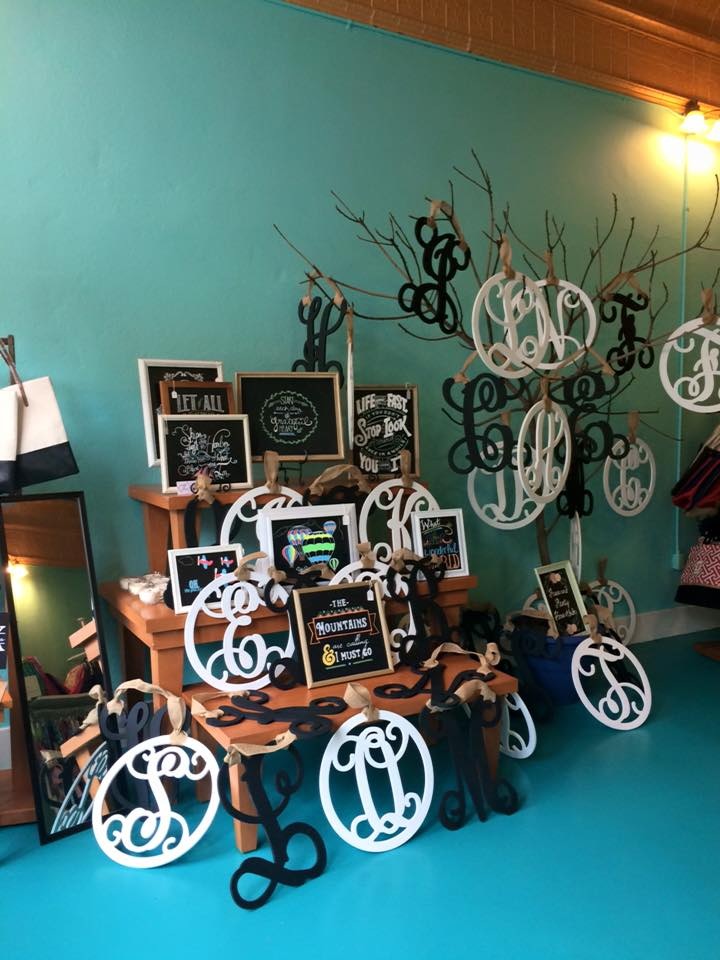
Another shop that you can’t miss in this block of Front Street is Focus Boutique.  This shop recently relocated and added much more stock to the (awesome bright turquoise) floor right after my shopping trip.  Check out this creative display of script letters.  I want three of them – my first initial, my husband’s first initial, and our last initial to decorate a wall upstairs.  Again, I added this to the wish list, but these are so fun that they might have trouble keeping them in stock for me.  Just think of (or check Pinterest for) all of the ways that you could decorate with these . . .  It makes my heart beat faster just thinking of the possibilities!

Focus

This store is bright and fun and refreshing, so be sure to check it out.  Focus also has some adorable clothes and accessories for young children, among other gift items.

Focus Storefront

At this point, if you have been taking your time in such a way that you have had to move your car to a new parking spot, you may be getting hungry.  If so, I suggest enjoying lunch at Marietta Brewing Company before crossing the street for more shopping.  I’m not sure why, but this restaurant just “feels” like Marietta to me.  Maybe it’s because of the location near the river, or maybe it’s the mural painted on a brick wall inside that makes me nostalgic.  Burgers.  Fries.  Beer.  Enjoy!

Brewery

If you are craving pizza for lunch, instead, check out The Pizza Place on Second Street.  (Marietta kids don’t know how good they have it.  Back in the day, we had to drive across the river to another state for a slice of this!)  Also on Second Street, Tampico offers Mexican cuisine and is a quick stop if you are in a hurry.  In addition, you might consider The Levee House, which provides a lovely view of the river along with your meal if you are shopping on a sunny day.  There are still other options, so do your homework to find the best fit for you.

Assuming that you ate at Marietta Brewing Company, it’s time to cross the street to visit a couple of my absolute favorite shops.  On the corner of Front and Butler Streets, you will find The Cook’s Shop.  I don’t cook much, but this store makes me want to.  You will most definitely find a gadget here that is new to you, as well as a gift in any price range for the gourmet chef in your life.  You could easily browse here for a long time.  Don’t forget to watch the time; you probably need to move your car again soon.

Next door to The Cook’s Shop is Simple Pleasures.  This may sound creepy, but I just want to live here.  Seriously.  I am ready to move in whenever the owners agree (NEVER).  Like The Cook’s Shop, this place is absolutely packed with merchandise, and here it is displayed in the most inviting way.  Books.  Journals.  Home décor.  Furniture.  Gifts.  Soaps.  Lotions.  Jewelry.  There is really nothing in this store that I don’t love, and I’m not even exaggerating.  I’ll take one of everything, thank you.

Simple Pleasures Store

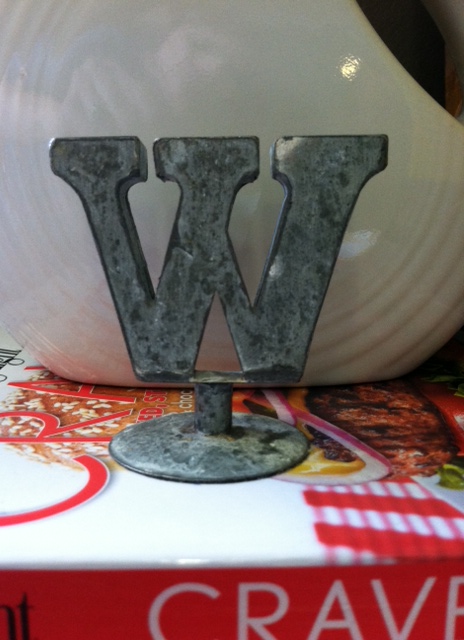
Here is one of my favorite small purchases from Simple Pleasures, a metal “W” that sits in my kitchen where I can admire it every day.  I appreciate the small touches that add character to a home – and the owners of Simple Pleasures do, too.  Love this store.

Simple Pleasures

Again, be sure to explore every store along your path in Marietta, but definitely do not miss Brick Street Cottage.  The owner “upcycles” old furniture, and her work and her vision for what “junk” can become are impressive.  If you aren’t in the market for furniture, don’t worry.  She also sells paint, some unique home décor items, and even some jewelry.  I like decorating with letters (as discussed above), and I noticed that she does, too, so I like her style.  Here is an unexpected Brick Street Cottage jewelry purchase that I absolutely love.

Brick Street Cottage

This ring is affordable (under $10) and makes a great gift (maybe for yourself).  It stretches to fit any size, and you can purchase charms (also under $10) that snap on and off so that you can change the look of your jewelry. The snap-on charms vary; some look like gems, some have vintage charm, some are shaped like owls.  The charms can also be used on necklaces (just as cute) that you can find at the store.  Best of all, the owner packages it all up for you in a cute bag, so there is no need for gift wrap.  Voila!  (If you are a close friend of mine, please pretend that you never saw this, or at least try to forget about it by Christmas . . . Thanks!)

Ring

You will also want to venture into Schafer Leather Store because it is truly a Marietta landmark.  The store originated in 1867 and is one of those rare small businesses that has survived the test of time by honoring its roots while also adapting to new consumer demands with each new decade.  I consider myself more of a city dweller these days, but when I am in Schafer’s, I just want to be a cowgirl.  I’m not even kidding.  You can saddle up and get yourself some new boots, a purse, earrings, a knife, or some urban cowboy fashions here.  If you don’t visit Shafer Leather Store, then did you really visit Marietta?

Schafer's Leather

This might be a good time to walk toward the levee and admire the river for a few minutes.  Take a break, relax, and then backtrack on Front Street toward Putnam.  After crossing Butler Street, you will find several more shops to enjoy.  Be sure to grab a snack at Putnam Street Chocolates to renew your energy.  I personally prefer anything there made from chocolate, which basically covers everything in the store.  Really, you can’t go wrong.

While shopping in this block, don’t miss Dad’s Primitive Workbench.  This store is bigger than it looks and holds more merchandise than you would imagine from standing outside.  Their claim to fame is repurposing old objects – old buckets for planters, old barrels for tables, old books for decoration.  I found a barrel there that would be the perfect addition between two rocking chairs on my front porch.  Add a red geranium in a galvanized bucket on top, and the display could be in Better Homes and Gardens.  They also sell candles and soaps with the natural, rugged design that fits their brand.  My friend bought a soap there as a Christmas gift for me, and the refreshing floral fragrance reminded me of my grandmother every time I washed my hands.  Ahhhh . . . Wonderful stuff.

 Soap

I suggest that you continue your shopping trip by walking around the block on Putnam Street to Second Street to Butler and back to Front.  On Putnam Street, you can add an Alex and Ani bracelet to your collection at Baker and Baker Jewelers.  On Second Street, visit Marietta Adventure Company.  They can help you plan an outdoor adventure in Marietta for the next day or the next time that you visit!

When you have exhausted Front Street and Second Street, you can use the footbridge to cross the river to continue your small-town shopping and to experience the river from a different vantage point.  This is a very Marietta thing to do.  You will find the bridge at the corner of Front and Butler Streets, and it will lead you right to the heart of historic Harmar village.  There are some eclectic shops here, as well, such as Found Antiques, and The Busy Bee is the kind of hole-in-the-wall diner that adventurous tourists dream of stumbling upon.  Many residents say that it offers the best breakfast in town, so you may want to come back the next morning.

At the end of the day, rest your feet while you savor dinner and drinks at Austyn’s on Front Street.  If crab cakes are on the menu, order them.  You won’t be disappointed.  If crab cakes aren’t your thing, don’t worry.  There are many other options, including Austyn’s chicken, another favorite of our family.  Ryan and I love to support this restaurant because the owners not only create a wonderful experience but are also friends who attended high school with us.  Cheers!

Austynn's

I hope this convinced you to spend some time in the heart of Marietta by enjoying some shopping downtown.  Be sure to do your own research, as well, before planning your road trip for a day or for a weekend getaway.  There are many small businesses and restaurants there that would warmly welcome you and help you enjoy your day.  And if you live in Marietta, when is the last time that you supported your downtown merchants?  Maybe it is true that you don’t truly appreciate what your hometown has to offer until you say goodbye.  I may no longer live in Marietta, but I promise that I will be back to do some shopping again soon.

Sternwheel Festival Photo Credit: Mike Tewkesbury https://www.flickr.com/photos/7687126@N06/2828787540/in/photolist-5iYgYY-8Y73Db-8Y41RB-5iYhF3-8Y74jd-8Y41HH-5iTZnn-8Y74yJ-fMscQq-8Y426r-8Y41B8-8Y73U5-8Y41cH-8Y42d2-8Y74Cu-8Y741U-8Y73Wf-mvh8a-tGrV2b-fMafHV-oUxm8o-8Atrsw-8CY3zn-57G3bA-6XRBKv-8BFXDa-5i1Jie-8Avs49-71ur5m-8Y41yi-8Y41E4-8Y41sP-8Y41VB-8Y73Ph-8Y41Zk-mvh88-34WwA1-fM8TrR-thB9d1-daxkaM-qJPCzu-uR262u-57q1P4-d9kQzb-4ARtEZ-57uw3s-57uuky-57qmuz-57qnp6-DYXzH

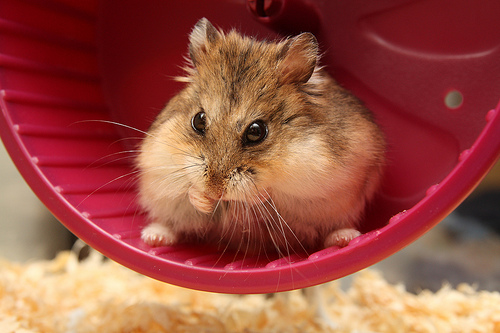
Hamster Wheel

Hamster Wheel

From late August through mid-June, when the school year is in full swing, I generally feel like I am running on a hamster wheel. I run nonstop, fearful that if I stop, or even attempt to slow down, I will fly off haphazardly, crashing and leaving everything around me in disarray – and we all know who would have to clean up that mess. So I just keep running. To insert obstacles into the race, I add more and more to my agenda as I run because (A.) I don’t like to say no and (B.) I can always make time for one more good idea. I will just run a little bit faster. I run and run and run, from meeting to class to soccer practice to church to basketball games to volunteer commitments to the next project that I have created for myself to another meeting, and sometimes I wonder what it is like to *Just. Sit. Still.*

And this is where I am a little bit lucky. As a teacher, I am fortunate to enjoy a summer break with my children, and, to be honest, given the current climate of education in America, it is one of the bright spots in a gloomy, depressing mess. But every year I fall prey to the same evil trap; it snags me in the dark winter months of hibernation and tightens its grip as the icy thaw reveals the promises of spring. It seems harmless at first, really. I begin to say things like, “It can wait; I will work on it this summer.” Or, “I don’t have time to worry about that right now, but I will have time to care about it in the summer.” Or, “I am really busy right now, but let’s get together this summer!” I will do it in the summer. I will fix it in the summer. I will check on it in the summer.

On my desk, there are post-it notes with lists of books to read this summer. I joined a book club in the spring – something that I have wanted to do for years – because summer vowed to bestow endless days of freedom that I could not possibly fill on my own. My kids created lists of activities that they intend to check off before the first day of school. And I said, “No problem! It’s summer!” My spring cleaning was never finished, and a general inventory of our house is in order. “No worries! We have all summer!” And the garage needs cleaned out. And I really want to learn to knit while I have time. And I have a chair that I want to refinish. And I have been waiting for the time to look for some new decorating ideas. And my photo albums are so far behind that I’m not sure what I was even trying to commemorate anymore. Just uploading and organizing and ordering all of those pictures will be a HUGE job . . . definitely a task to save for summer.

And we need to catch up on some doctor appointments this summer.

And I can’t wait to invest time in my blog every day!

And I am TOTALLY going to redeem myself as a mother by forcing encouraging my kids to keep up with their summer homework assignments this year.

And I told loved ones that we would spend time together, you know, in summer. The boys and I would have lunch with old friends. We would take road trips to visit those at a distance. We would meet neighbors at the park every week. We would have SO MUCH TIME!

So the fourth of July hit me with a bang last week, and not just because of the fireworks. It was a reminder that summer is slipping away, that the promises she made me remain unfulfilled. There really aren’t more hours in a summer day. More sunshine, yes. More hours, no. Life is still busy. With kids home from school, there are more messes to clean up, more snacks to prepare, more arguments to officiate, more activities to coordinate. Time does not decelerate in summer, just as it doesn’t slow down on the weekends or during a coveted week of vacation.

I have not read one book from my post-it notes. My blog has been quiet and lonely. My kids are dreadfully behind on their summer homework. My projects aren’t finished. (Or started.)

And I still don’t know how to knit.

Don’t get me wrong. I’m exceedingly grateful for the time that I can devote to my family when I am not working in the summer. I don’t take it for granted. But all of the lists, all of the unfinished projects, all of the tasks that remain incomplete and dreams that remain unfulfilled – well, they can drag a girl down. And, no, we have not been moping around the house, avoiding all of the fun. We have been having fun, and maybe that’s part of the problem. Or maybe it’s not. This whole balancing act is exhausting, and the truth is that after eleven years of parenting I’m still not exactly sure how this is all supposed to work.

Maybe I am lamenting how quickly time passes. The empty grid, those clean white boxes on the calendar that seem swollen with potential at the start of each year, fills in a flash with the exciting and, more often, the mundane demands of life. The days bend and flip and slide from your hands like a fish escaping back to the water. You try to hold on, but time is elusive, gone so quickly, and what is left behind? Maybe a picture . . . that might, eventually, find its way to a photo album . . . maybe.

Or maybe I am frustrated that I have not planned better, that I put so much off until summer in the first place. Maybe I am just venting my aggravation with myself – that I am not rising before dawn, that I have not maintained a structured plan for every hour like I do when the hamster wheel is in motion. I’m sure that I could have accomplished more by now if I had been more diligent. Then I would not be tormented by reminders of my lackadaisical attitude, like the remnants of fifth grade that my son unloaded several weeks ago, still neatly stacked in a corner. That’s what I should be doing right now – sorting piles instead of writing about them. No wonder I am a hot mess. And I’m pretty sure that I could have knit a sweater by now if I had my stuff together. 

Or maybe my go-go-go personality is just trying to process the potential of life outside the wheel. Although it fills me with anxiety, maybe there is joy in NOT living from a to-do list for a few days or, if you are fortunate, a few weeks. Maybe there is peace in NOT waking up to an alarm every single day. Satisfaction in NOT prioritizing the unimportant just to cross it off a list. Fulfillment in NOT planning the most efficient way to dissect the day but in allowing the day to unfold organically. Happiness in NOT accomplishing something but in enjoying something, instead.

As with so much of my life, I am still figuring it out, seeking balance, sorting through the different perspectives and emotions. Maybe your legs are aching, growing weary on the hamster wheel, as well. Maybe you can relate.

If you don’t have time to ponder it today, don’t worry. You will have more time this weekend.

That’s what she promises, anyway. But I wouldn’t trust her.

photo credit: <a href=”http://www.flickr.com/photos/28638538@N00/4182287774″>Hamster in a wheel</a> via <a href=”http://photopin.com”>photopin</a&gt; <a href=”https://creativecommons.org/licenses/by/2.0/”>(license)</a&gt;

What My Father Taught Me By Fighting For His Life

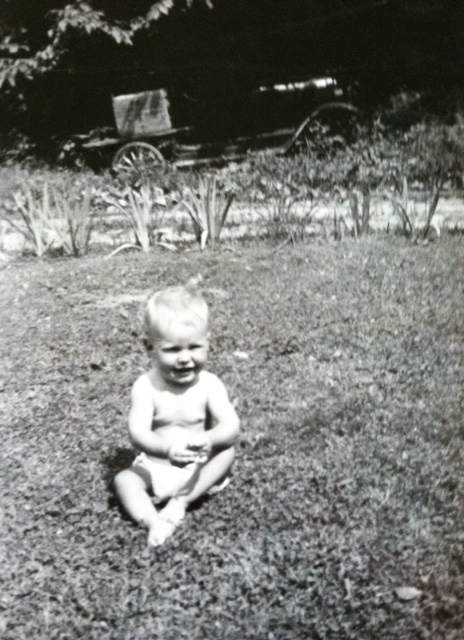
dad baby

When my dad was born, the doctor told my grandmother that he was going to die. He had a rare congenital birth defect affecting his lower abdomen, and there was little chance that it could be surgically corrected. My grandma was advised to enjoy the brief time that she would have with her blonde-haired bundle of joy. The doctor didn’t even file a birth certificate. There was no hope. And that was that.

That may sound cold and heartless, but the doctor’s prognosis was probably reasonable for a baby born with such a rare and serious condition to a blue-collar family living along a remote gravel road in The Middle of Nowhere, Ohio, in 1950. But the doctor didn’t know that my grandma, who was already raising my dad’s four siblings and who had kept the home fires burning while my grandfather served abroad in World War 2, did not take “no” for an answer. Ever. Her tenacity in caring for that baby and her unwavering faith in God are now preserved in family legends. She refused to surrender without a fight, ultimately seeking treatment at the best children’s hospital in the state despite having little means to do so, and the fact that I exist to write this is evidence that her persistence paid off.

But this essay isn’t about my grandmother. It’s about the baby, my dad, who was immersed in a battle long before he knew what fighting for your life actually meant. First, he survived infancy, which was an impressive feat in itself.   Then, after many childhood surgeries, excruciating recoveries, and months of hospitalizations far from home, he was still thriving at the age of thirteen – another milestone that doctors did not believe he would reach. (This earned him a bit of spoiling from his older siblings, one of whom actually bought him a pony. No joke.)

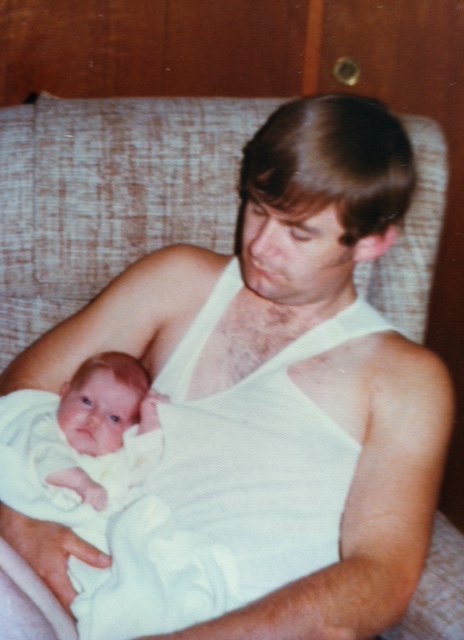
dad lady

As soon as he was old enough, he began working full-time, insisting on exerting his independence and keeping up with – or surpassing – his peers. A few years later he was married, something he probably never imagined given his gloomy prognosis as a child. He and my mother were reminded that he would never father children, but the young couple figured there was no harm in trying, and, voila, the family grew by one girl and one boy.

image_2

Even after beating so many odds, my dad didn’t waste time contemplating old age. Why would he? He had already challenged fate so many times that expecting to qualify for the senior discount at McDonalds seemed a bit presumptuous, even to him. But last year he retired from a long and respected career as a butcher, and today his biggest smiles can be attributed to his four grandsons. I bet his younger self never, ever saw that coming.

dad grandpa

My dad doesn’t talk much about his medical history, and he probably won’t appreciate that I am writing about it either. In fact, most of what I know has been collected in bits and pieces from my grandma, my mom, and my aunts and uncles, and only because I won’t stop asking. Maybe the stories churn up too many painful memories. Or maybe, like an old sweater, the memories have lost their shape and just don’t fit right anymore. Regardless, I know that my dad’s experiences shaped him, and, in turn, shaped me. Here’s just a sampling of the wisdom he has shared by being the man who would never give up.

  1. Your challenges may shape you, but they don’t have to define you. Every experience has the power to shape you, to mold your spirit into something just a little different than it was before, and my dad’s childhood included some pretty traumatic experiences that certainly impacted the man he became. However, my dad’s life has never been about suffering or limitations. Over the years, he had every right to complain and to seek sympathy and to worry and to find shortcuts, but he chose not to do those things, even when he probably should have. He taught me to accept what life throws at you, grow from those experiences, and move forward. Progress doesn’t result from sitting still.
  2. Take a lesson from man’s best friends. My dad loves animals, particularly dogs and horses. Both dogs and horses are known to be extremely loyal companions, and it is no surprise that loyalty is a quality that my dad holds in high regard. There were many times when my brother and I questioned his loyalty to people who did not reciprocate, but my dad’s values did not change depending upon who was the recipient of his kindness. I like to imagine that his independence and strong sense of right and wrong sprouted from the challenges that he faced as a kid. Whether they did or they didn’t, his example taught us to be respectful and loyal to our friends, neighbors, family, and employers, no matter what. Your own integrity is what matters; if others abuse your devotion, move forward knowing that you can rest comfortably at night while they tiptoe around the minefield that is their conscience.
  3. You have no idea what someone else has experienced just by looking at him. My dad’s high school graduation photos reveal that he was quite a handsome catch back in the day. Today, his hair is just a little (okay, a lot) thinner, he’s added glasses to his ensemble, and he could easily blend into any grandparent scene. Unless you are a doctor who happens to examine his x-rays, you would have no idea that what is on the inside of him is not the same as what is on the inside of you. And if you ARE a doctor who happens to examine his x-rays, you will most likely make a bee line to his hospital room to ask him lots and lots of questions. It’s okay. He’s used to that.

    The point is that when we see people and we think that they look okay, then we assume that they feel okay, too. And when people who look okay say that they don’t feel well, especially if the problem is chronic, we, as a culture, tend to dismiss them as whiners. If they were really THAT sick, then surely we would be able to SEE that. Maybe this is why my dad never complained, even when it was warranted, or why he dragged himself to work at times when anyone else would have stayed home. He made a habit of reminding us to be compassionate and to recognize that people face invisible battles every day. When people say they are in pain, believe them, and realize that it is probably worse than they are even sharing – because they are afraid that you will think that it is all in their head.

  4. There are no “issues.” There are people. Politics is a common topic of conversation in our family, and that is mainly because my dad is an avid reader and watcher of political news. His politics are not based on alliance with a particular political party or a family tradition or a single point of interest. He is interested in how leaders make decisions and how they talk about people – because every political “issue” that is discussed as a big, abstract idea is really about people at the end of the day. When government assistance has helped to save your life, you understand the human side of political decisions. When you have lived in fear of losing your health insurance and bankrupting your family, you are keenly aware that “issues” are “people,” and your children understand that, too.
  5. Don’t let anyone put you into a box. Build your own box. My dad, at a very young age, refused to climb into the box that his doctors designed for him. In his case, that box, literally, would have been buried six feet under far too soon. Instead, in a figurative way, he decided to build his own box. And when he outgrew that one, he built himself another. And then another. And then another. He made a habit of defying expectations, and he encouraged us to defy them, too. If you have to chop off a limb to fit into the box someone else has built for you, it’s time to build yourself a new box, with room to grow.
  6. Walk a mile in someone else’s shoes. If that doesn’t make you nicer, try running a marathon in them. “Walking a mile in someone else’s shoes” sounds nice and has certainly become a common refrain in character education. My dad reiterated that we all benefit when we are more empathetic toward others and when we recognize that any one of us could unexpectedly face the greatest obstacle of our lives at any time. But a mile isn’t a very long walk, really. People who live with chronic illness live with it for the long haul. Make sure that your empathy is the kind that lasts. Try not to be the friend who jumps in to fill the immediate need but forgets that the struggle doesn’t end – ever.
  7. When you are struggling, help someone else. My dad never had a high profile job that paid a lot of money, but he was always able to provide for us and would have worked five jobs if it had been necessary to make ends meet. But no matter how much or how little we had at any given time during my childhood, he was willing to share it with someone in need. A neighbor needed help in the middle of the night? He would be there. A friend’s car broke down on the side of the road? Give him ten minutes. His co-worker needed to borrow money for gas? He had only a few dollars left until payday, but here you go. I don’t recall my dad asking for anything, but I vividly remember him giving. A lot. Even when he didn’t have much to give. Even when he could hardly stand up. Even when the person didn’t deserve it. He has helped a lot of people, but he taught us this secret truth: Helping others is a great way to help yourself.
  8. There are lots of ways to be smart. When I was younger, I was a bit of an academic snob. My parents encouraged us to excel in school, and I enjoy learning about almost anything. (Except chemistry. I really hated chemistry.) I applied my dad’s work ethic to my studies and graduated from high school as valedictorian. Grades mattered to me, and academic knowledge seemed like a good way to compare people at the time, and I thought I was smart.

    I don’t actually know much about my dad’s school years other than that his attendance wasn’t always the best. When you are in the hospital, it is hard to go to school. I imagine that his grades suffered. He did not go to college, but he learned a trade and garnered great respect for his skill. I remember a time when he was laid off from his job, and before he could even look for a new position, he received phone calls from employers who wanted his help. He was not valedictorian, but he is a smart guy. It turns out that there are lots of ways to be smart.
    Now, I teach students who are considered at-risk for a variety of reasons; their grades aren’t always the best, but many of them are exceptionally smart in ways that are not measured at school. It turns out that life is full of educational experiences, and while I was smart on paper when I graduated, I wasn’t nearly as smart as I thought I was. Academics are important, but true wisdom is never assessed on a report card. My dad taught me this because, well, he’s really smart.

  9. Work hard. Really hard. I have already mentioned that my dad is a hard worker, but this is such a central part of who he is that it demands its own spot on the list. My dad has always given more than 100%. Always. In fact, this part of his character is so intense that it is both a blessing and a curse. He missed some things because of his work ethic, and that was disappointing at times. However, I am extremely grateful that my dad taught us the pleasure of a job well done – no matter how hard the job is or how little the material reward. I am baffled by indifference and indolence. My dad taught me better.
  10. If someone says that you can’t, just smile. But in your head say, “Just watch me.” My dad is not confrontational, but he is competitive. If he wants to figure something out, he will figure it out. If he wants to get something done, he will get it done. If he thinks that you don’t think he can do something, he will do it. He won’t argue with you. He won’t fight about it. But come back and visit in a week or two and whatever you said couldn’t be done will be finished. He just wasn’t going to tell you about it. He didn’t need to. The satisfaction was in proving that he could do it – to himself.

This is just a sampling of the lessons that I learned from my dad, a man who has always refused to give in or give up. On this Father’s Day, I am so grateful for his unfailing perseverance; it is, after all, the reason I am even here. I am also grateful that his grandchildren are still learning from him today, so many years after he was given a death sentence while swaddled in my grandmother’s arms. Thanks, Dad, for fighting the good fight and beating the odds. I will always root for the underdog because of you; those unexpected victories are so much more rewarding.

dad wedding